Projects / Mars Rover
Rover End-Effector and Science Hardware
End-Effector Team Lead, Oregon State Mars Rover Robotics Club
- Dates
- Apr 2026 – Present
- Role
- End-Effector Team Lead
- Earlier work
- Science subsystem hardware
- Tools
- Fusion 360, tolerance analysis
Overview
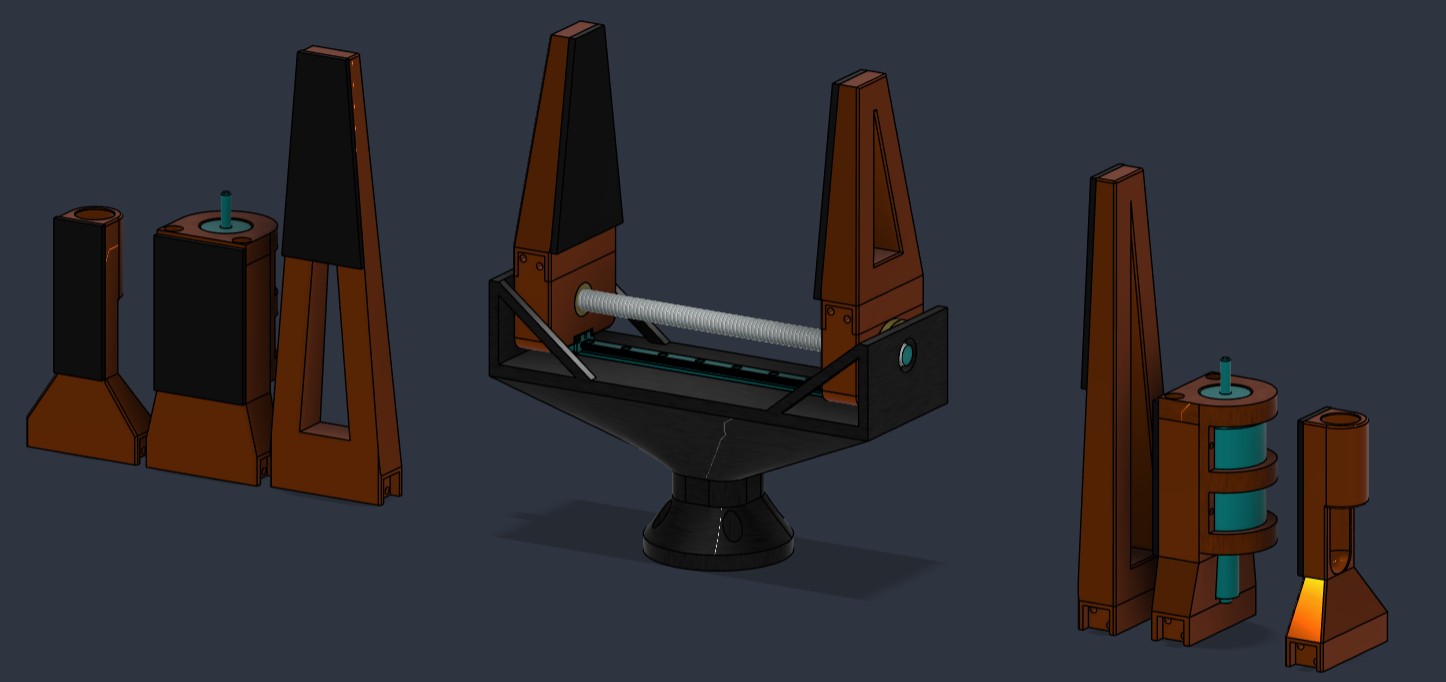
The Oregon State Mars Rover team designs and builds a rover for outdoor competition. I joined in spring 2026 and started on the science subsystem, designing hardware to hold the spectrometer and sample flasks. I now lead the team designing a new end-effector for the rover's arm.
Leading the end-effector redesign
The goal is a gripper that gives the arm more dexterity and can handle a wider range of tasks than the current design. The project is in the research and early design stage. Right now that means:
- Researching gripper designs and actuation approaches that fit the arm's payload and packaging limits
- Defining requirements with the team based on the tasks the rover needs to perform
- Organizing the design work and splitting it up among team members
Science subsystem
- Spectrometer enclosure. Designed and iterated a protective enclosure in Fusion 360, defining the mechanical interfaces, mounting geometry, component clearances, and fabrication constraints.
- Flask clamp. Designed a clamping mechanism to hold soil-water slurry samples during pump-driven testing and material transfer. It holds the flask firmly but is still quick to load and unload.
- Integration. Worked on tolerance analysis and mounting strategies with teammates to improve rigidity, manufacturability, and serviceability for off-road driving.
Constraints
- Vibration and shock. Everything has to survive driving over rough ground, not just sit on a bench.
- Space and weight. Each subsystem competes for a limited share of the rover's packaging and mass budget.
- What the club can make. Parts have to be designed around the tools and materials the club actually has.