Projects / Robotic Arm
6-Axis Robotic Arm
Independent mechatronics project, designed and built by me
- Dates
- Jan 2026 – Present
- Status
- In progress
- Hardware
- NEMA 17, A4988, Arduino Uno
- Tools
- Fusion 360, Bambu P1S
Overview
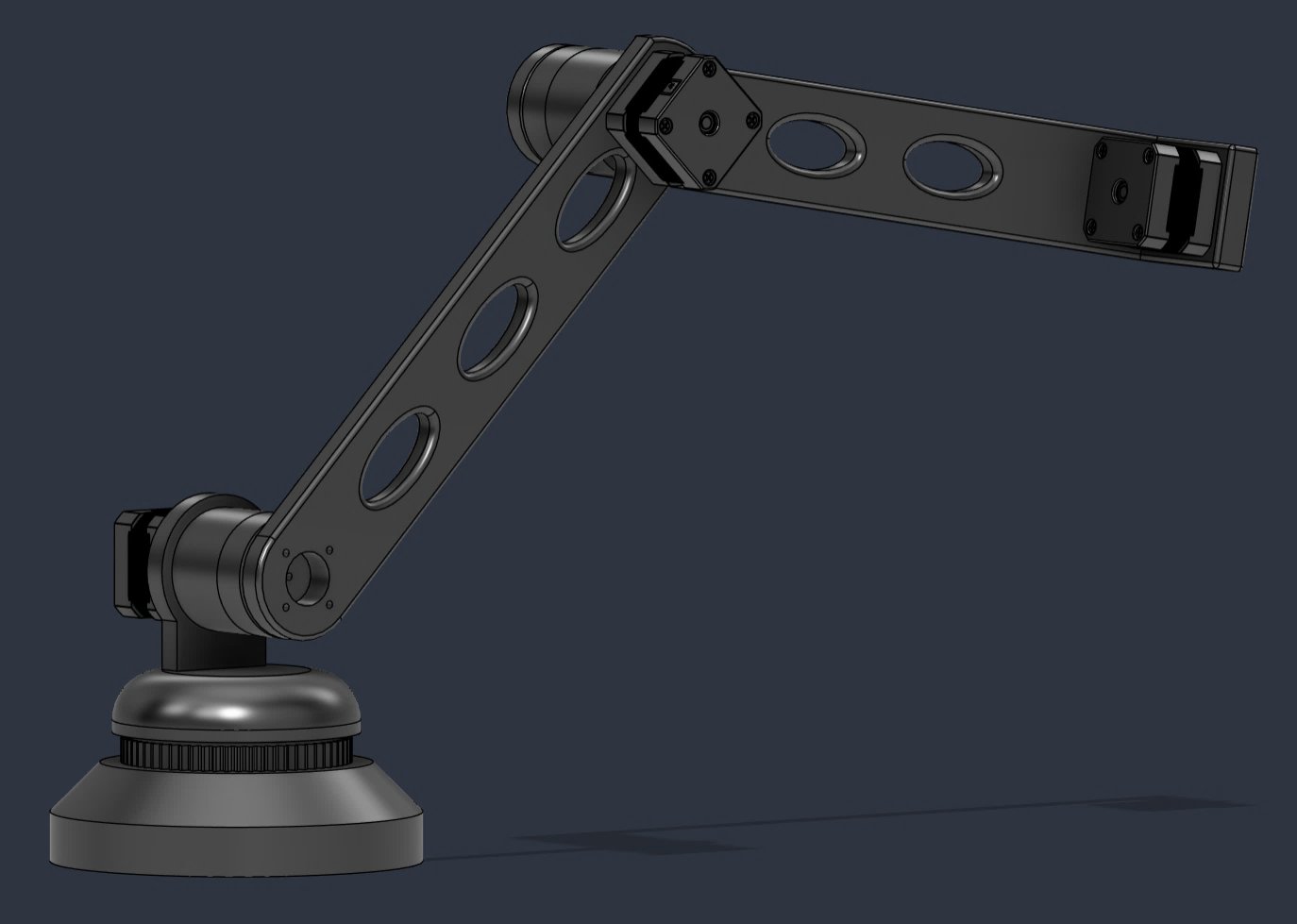
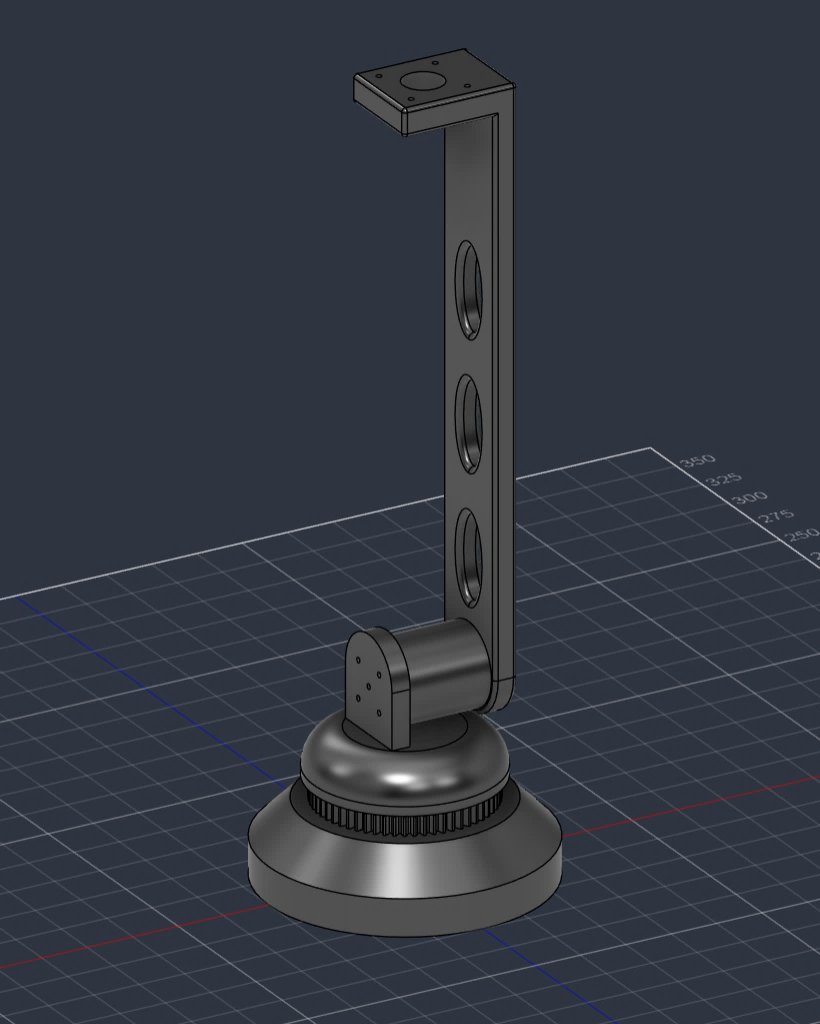
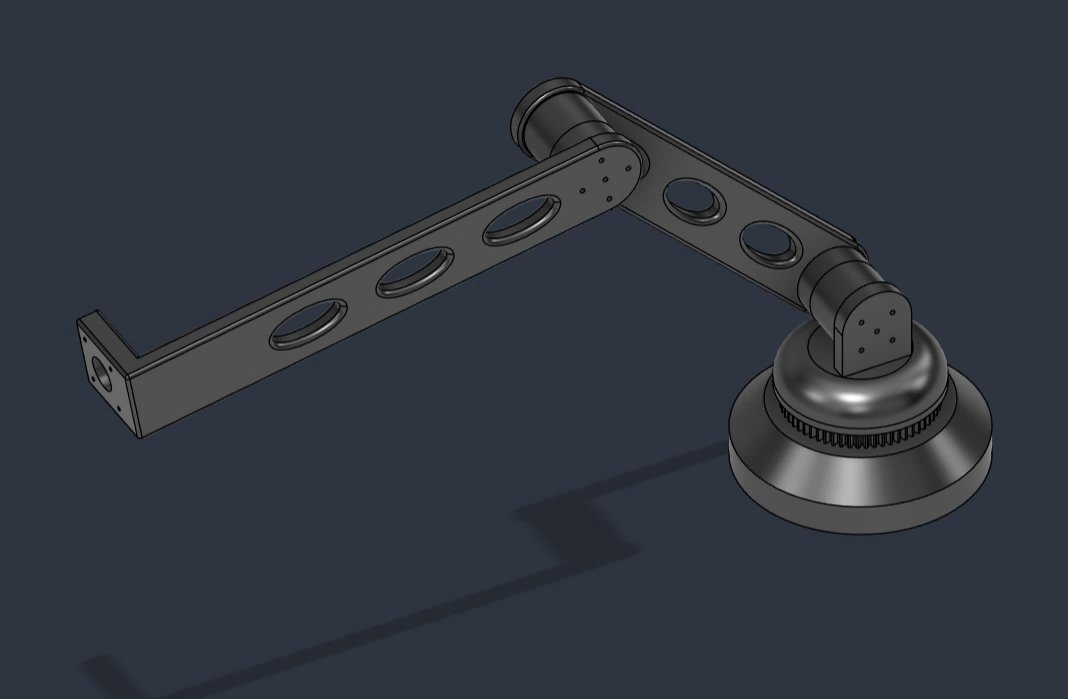
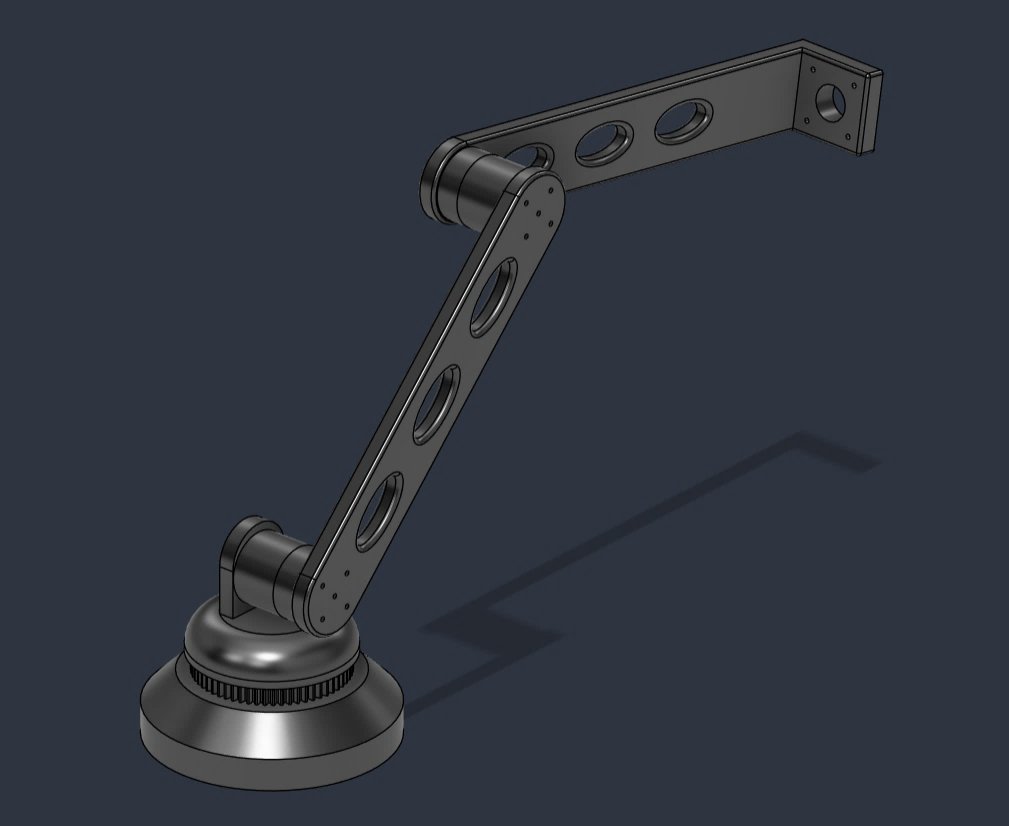
I wanted one project that covered mechanical design, fabrication, electronics, and control together, instead of in separate class assignments. So I'm designing and building a 6-axis robotic arm in Fusion 360, driven by NEMA 17 stepper motors, A4988 drivers, and Arduino Uno controllers.
Goals and constraints
- No kit. Design, fabricate, wire, and program the arm myself.
- Cheap, well-documented parts. Use motors and drivers that are affordable and widely used for a 6-axis build.
- Printable parts. Design everything to be 3D printed and assembled with the tools I have.
What I'm doing
- Designing the arm structure and joints in Fusion 360
- Fabricating custom components on a Bambu P1S FDM 3D printer
- Coordinating multi-axis motor control across NEMA 17 steppers and A4988 drivers
- Programming Arduino Uno microcontrollers to drive coordinated axis motion
- Iterating on the design after fit checks and motion testing
Design decisions
- Actuation. NEMA 17 steppers paired with A4988 drivers give straightforward open-loop position control across 6 axes.
- Structure. Joints and mounts are designed in Fusion 360 around FDM printing on my Bambu P1S.
- Control. Arduino Uno firmware coordinates step and direction signals across all 6 axes.
Testing
- Testing individual axis motion before combining full arm movement
- Checking for mechanical binding, backlash, and alignment issues during assembly
- Revising mounts and joints based on what testing shows
Challenges
Getting consistent, repeatable motion out of 3D-printed parts has been harder than the CAD model suggested. Small amounts of backlash and misalignment in the joints show up quickly once multiple axes move together, and tuning stepper current and microstepping has taken real trial and error rather than a single correct setting. Coordinating 6 axes also raises the stakes on cumulative tolerance compared to a simpler arm.
Where it stands
I'm still designing, printing, and testing the structure, actuation, and multi-axis control. Right now the goal is controlled joint motion. Computer vision, force feedback, and path planning would come later.
What I'm learning
- What it actually takes to carry a design from CAD to a working physical system
- How mechanical tolerance and backlash show up in real assemblies, not just drawings
- How to debug a system where mechanical and electrical problems look the same from the outside